Wondering whether Louisville’s "best" neighborhood is in Old Town or one of the city’s newer communities? The answer is usually less about age and more about how you want your home to work for your daily life. If you are comparing charm, walkability, lot size, parks, or commute patterns, this guide will help you sort through the real differences so you can focus on the right fit. Let’s dive in.
Old Town Louisville at a Glance
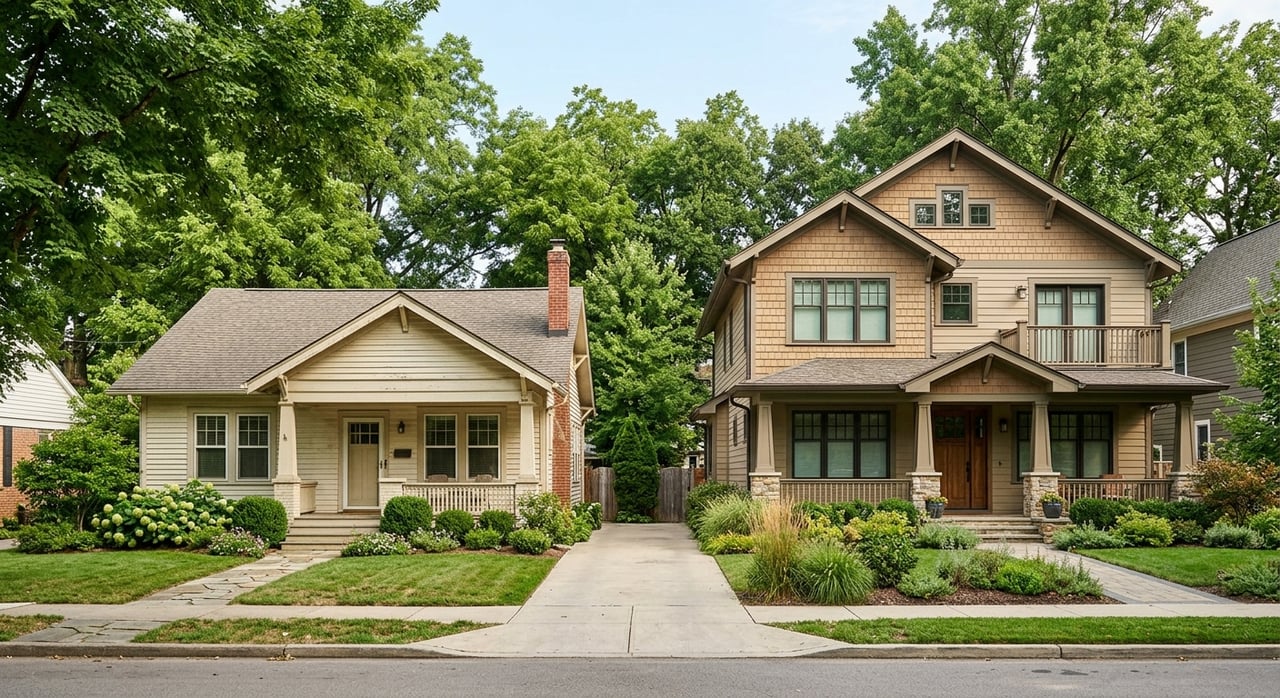
Old Town is Louisville’s historic residential core surrounding Downtown. It is known for a mix of older mining cottages, compounds, and larger homes, with many modest single-story houses that help define the area’s small-town character.
A big part of that feel comes from the original subdivision pattern. Many lots in Old Town do not match current lot-size and lot-width standards, which means you will often see smaller or more irregular parcels than in planned subdivisions.
For some buyers, that is exactly the appeal. You may get a home with a distinct architectural personality, a compact lot, and a location that feels closely tied to Downtown Louisville.
What Living in Old Town Feels Like
If you want to be near Louisville’s cultural and entertainment hub, Old Town stands out. Downtown Louisville and Steinbaugh Pavilion host community events like the Farmers Market, Street Faire concerts, and Old Town Skate.
That gives this part of town a more active, connected feel than many subdivision-style neighborhoods. You are not just buying a house here. You are often buying closer access to local events, dining, and day-to-day errands.
Walkability is one of Old Town’s clearest strengths. Downtown Louisville has a Walk Score of 82, and the city notes that about 32 miles of trails connect neighborhoods to parks and amenities.
Old Town Lot Patterns and Access
Old Town’s older block pattern can look very different from newer Louisville neighborhoods. In one East Louisville and Miners Field example within Old Town, existing lots averaged 5,880 square feet, with sizes ranging from 3,150 to 8,418 square feet.
That same example also showed alley-based parking with no driveway on Lee Avenue. For buyers, details like alley access, smaller frontage, and nonstandard lot shapes are often part of what creates the neighborhood’s historic feel.
These features can be charming, but they also affect how a property functions. Parking, additions, and outdoor space may look different here than they would in a newer planned community.
Preservation Rules Matter in Old Town
If you love the idea of a historic home, it is smart to understand the rules before you buy. Louisville has active preservation policies in Old Town, and the city recognizes more than 69 local landmarks.
The city also says demolition review can be required for work that removes street-facing elements or more than half of a structure over 50 years old. If you are thinking about a major remodel, expansion, or teardown potential, that should be part of your decision from the start.
This does not make Old Town harder to love. It simply means you should match your renovation goals to the property and the applicable review process.
Newer Louisville at a Glance
Newer Louisville is not one single neighborhood style. Many subdivisions are regulated through planned unit development, or PUD, rules, which the city describes as a flexible zoning tool for more coordinated site and land planning.
That flexibility creates a broader mix of housing patterns. Depending on the area, you may see single-family homes, townhomes, apartments, co-housing, or live-work units.
So when buyers say they want "newer Louisville," they are often talking about a wider range of choices. Some communities feel more suburban, while others are compact, connected, and intentionally designed around shared amenities.
Newer Neighborhoods Can Still Be Compact
One common assumption is that newer neighborhoods always mean larger lots and more spread-out homes. In Louisville, that is not always the case.
A recent city example, East Street Village, included 15 single-family lots averaging 3,508 square feet, or about 41 by 89 feet. That is a helpful reminder that newer development can also be relatively compact.
If lot size is high on your list, it is important to look at the exact subdivision rather than rely on the neighborhood label alone. Newer does not automatically mean bigger.
Amenities in Newer Louisville
Where newer Louisville often stands out is in planned amenities. Some communities are designed around internal parks, trail access, transit connections, or shared open space.
Kestrel, described by the city as Louisville’s newest affordable housing development, includes 129 townhomes and 71 senior apartments with access to bike trails, transit along South Boulder Road, multiple parks, and community garden plots. Steel Ranch includes a park within the subdivision, and Bullhead Gulch Open Space has entry points near the Steel Ranch entrance.
For buyers who want easy access to outdoor space without relying on Downtown, these neighborhood features can be a strong advantage. The experience tends to feel more planned and more internally connected.
Walkability Versus Driving Convenience
For many buyers, the biggest trade-off comes down to how you move through your day. If you want to walk to dining, events, and neighborhood errands, Old Town is generally the stronger fit.
If you prioritize regional driving access, newer corridor-oriented neighborhoods may have an edge. Key Louisville corridors include South Boulder Road, McCaslin Boulevard, and the Highway 42 and 96th Street area.
The South Boulder Road small-area plan says those roads carry roughly 20,000 to 25,000 vehicles per day. The area is also served by RTD routes DASH and 228, though the city notes that some sidewalks are narrow and some crossings are difficult in places.
In practical terms, older downtown-area homes often win on walkability, while newer neighborhoods can offer more direct access for commuting by car. That said, some newer areas also benefit from trail and transit connections, so the exact location still matters.
Parks and Public Space Across Louisville
Louisville has more than 355 acres of parkland, and the city says its trail system connects residents to parks and amenities from their neighborhoods. That is good news no matter which part of town you prefer.
The difference is usually the type of access you value most. Old Town offers closer proximity to downtown venues and events, while newer neighborhoods often rely on internal parks and trail links.
Neither option is automatically better. It depends on whether you picture your free time around Downtown activity or around neighborhood open space and recreation routes.
Which Buyers Often Prefer Old Town
Old Town tends to appeal to buyers who value:
- Historic cottage-scale homes
- Smaller or irregular lots
- Alley access and older block patterns
- Close proximity to Downtown Louisville
- A walk-to-events lifestyle
- Character over uniformity
It can also be a strong match if you enjoy the look and feel of older homes and are comfortable doing extra due diligence before major exterior changes.
Which Buyers Often Prefer Newer Louisville
Newer Louisville often appeals to buyers who value:
- Newer construction
- More predictable planned-community layouts
- A wider mix of housing types
- Internal parks and trail connections
- Access to South Boulder Road, McCaslin, and regional routes
- Community design that may feel more structured
This option can be especially useful if your routine depends on driving convenience or if you want neighborhood amenities built into the subdivision plan.
How to Compare Homes More Accurately
When you are house hunting in Louisville, broad labels can only take you so far. The better approach is to compare the exact block, subdivision, and property rules.
Start with a few practical questions:
- Is the home in the Old Town overlay or a PUD?
- How do lot size and setbacks affect future additions?
- Are preservation rules likely to affect remodel plans?
- How walkable is this specific block?
- How easy is access to Downtown, parks, trails, and major roads?
Those details often matter more than whether a home is technically in an older or newer area. In Louisville, both old and new neighborhoods can include compact, trail-connected pockets.
The Bottom Line on Old Town vs. Newer Louisville
If you are deciding between Old Town and newer Louisville, the best choice usually comes down to your day-to-day priorities. Old Town often offers historic character, smaller lots, and stronger walk-to-downtown convenience.
Newer neighborhoods often offer planned amenities, a broader mix of housing types, and easier regional driving access. Neither category wins across the board.
The real key is matching the home, the block, and the neighborhood layout to the way you want to live. If you want help comparing Louisville neighborhoods with a local, practical lens, Janet Leap can help you narrow the options and make a confident move.
FAQs
What is the difference between Old Town and newer Louisville neighborhoods?
- Old Town is Louisville’s historic core near Downtown, with older homes, smaller or irregular lots, and preservation considerations, while newer Louisville includes planned communities with a wider range of housing types, amenities, and commute patterns.
Is Old Town Louisville more walkable than newer neighborhoods?
- In general, yes. Downtown Louisville has a Walk Score of 82, and Old Town is usually the strongest fit if you want to walk to dining, events, and errands.
Are newer Louisville neighborhoods all large-lot suburban communities?
- No. City examples show that some newer neighborhoods are also compact, including developments with relatively small single-family lots and a mix of attached housing types.
Do Old Town Louisville homes have special remodel rules?
- They can. Louisville’s preservation policies may require demolition review for certain changes to structures over 50 years old, especially when work affects street-facing elements or a large portion of the building.
Which Louisville neighborhoods are better for commuting?
- That depends on the location, but newer neighborhoods near corridors like South Boulder Road, McCaslin Boulevard, and Highway 42 often offer more direct driving access, while Old Town tends to be stronger for walkability.
What should you verify before buying in Louisville?
- Confirm whether the property is in the Old Town overlay or a PUD, review lot and setback constraints, understand any preservation rules, and compare the exact block’s walkability, park access, and commuting options.